
WPC Profiles
Recomance yongtech this composite boards brand
Explore the benefits of WPC fence decking with Yongtech. Learn how to coordinate outdoor decking and fencing systems for your ideal outdoor space.
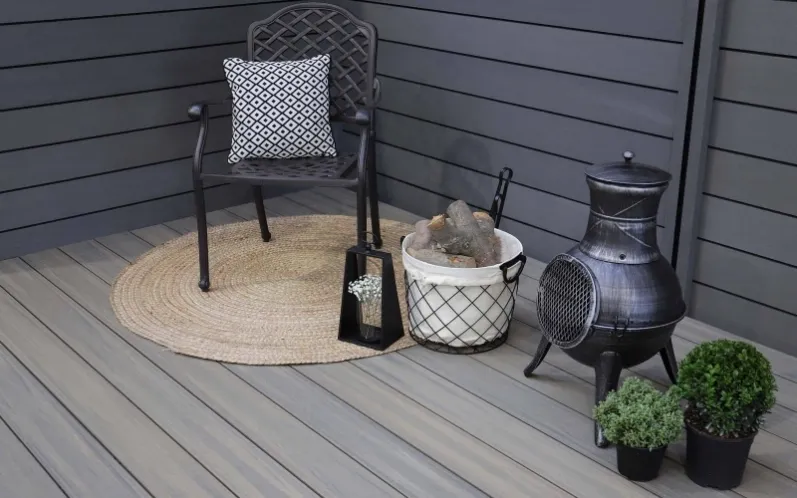
Choosing WPC fence decking means selecting two complementary outdoor systems: boards for the walking surface and fencing for privacy or boundaries. This guide explains what to compare, how to coordinate the design, and which installation details deserve attention. If Yongtech is on your shortlist, use these checks to assess the exact products rather than relying on broad composite-material claims.
What is WPC fence decking?
WPC stands for wood-plastic composite, a material combining wood-based particles or fibers with plastic and other ingredients. The phrase “wpc fence decking” brings together two applications of this material: outdoor decking and fence components. They belong to the same material family, but should be evaluated as separate products with their own installation requirements. The USDA Forest Products Laboratory describes WPC uses that include both decking and fencing.
Think of the deck as the usable floor of your outdoor room and the fence as its boundary. Plan them together visually, but request separate specifications for each. Your buying checklist should distinguish the walking surface, fence infill, support structure, posts, fasteners, and finishing pieces.
The material name alone does not establish performance. Research from the Forest Products Laboratory shows that WPC durability depends on factors including composition and moisture exposure; plastic content does not make every product immune to deterioration. Ask for evidence relevant to the specific board, not assurances about composites generally.
Start with the outdoor space you actually need
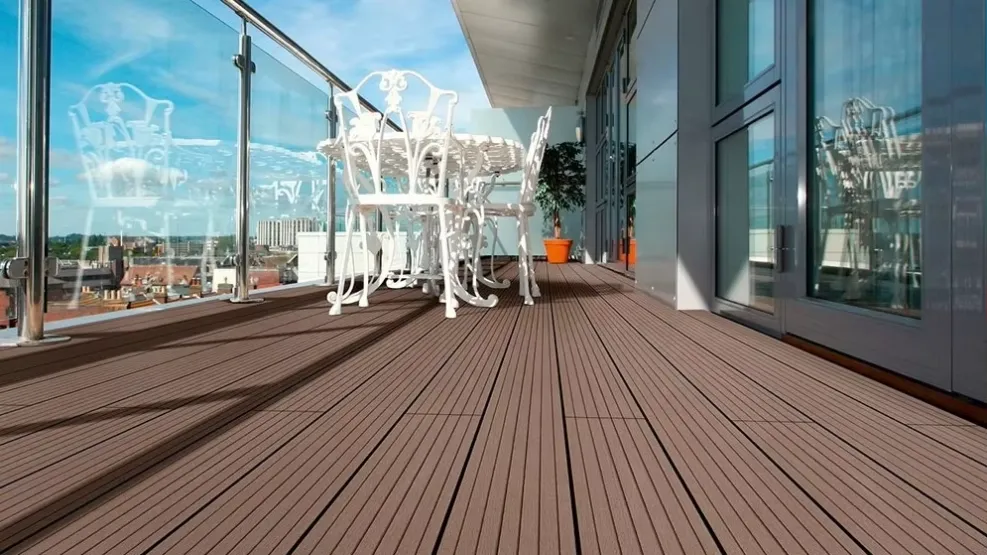
Before comparing colors, describe how you want to use the area. A dining terrace needs room for chairs to move, while a quiet garden corner may prioritize screening and a small seating arrangement. Sketch those activities first, then position the deck and fence around them.
Write a short project brief covering:
- Everyday use: Identify dining, lounging, entertaining, or access needs, including the furniture you intend to keep.
- Privacy priorities: Mark the views you want to screen without automatically enclosing every side.
- Site conditions: Note sunny areas, damp corners, uneven ground, and existing structures for your installer to assess.
- Design preferences: Collect a few examples of board colors, fence styles, and trim details you genuinely like.
- Care expectations: Decide how much routine cleaning you are willing to do rather than seeking a maintenance-free promise.
Use this brief when requesting samples and quotations. It gives suppliers a clearer task than “recommend your best decking” and helps you compare proposals against the same needs.
How should you compare decking materials?
Compare decking materials by examining construction, documented performance, installation requirements, care instructions, and the complete installed scope. A board’s color and price are only part of the decision. For composite products, protective capping is one meaningful distinction: manufacturers use polymer caps to help protect the core against moisture, staining, and weather exposure, although cap coverage varies.
Board construction and supporting evidence
Ask whether the proposed composite deck boards are capped or uncapped, and request a cross-section sample. Have the supplier identify which surfaces the cap covers and explain how cut ends are treated. Keep the sample alongside the written product description so you can check that the delivered material matches your selection.
Do not treat “solid,” “hollow,” or “premium” as a complete specification. Request the installation guide, approved uses, support requirements, and warranty for the exact profile. For context, established decking installation guides specify joist spacing, gapping, and fasteners rather than relying on the material label alone. Those documents illustrate what to request; their dimensions should not be transferred to another brand.
Surface appearance and everyday comfort
View samples outside beside your siding, paving, and doors. Compare them in sunlight and shade before choosing a large area of one color. Also consider shade planning: composite decking can become hot in direct sun, particularly in darker colors, so appearance should not be the only selection criterion.
For wet areas or frequently used walkways, request slip-performance information for the specific product and intended conditions. Do not accept a textured finish as your only evidence. Ask the supplier to explain the documentation in plain language before you commit.
Coordinate composite fencing without making everything match
Treat composite fencing as part of the overall palette rather than insisting on an identical finish everywhere. You might pair a warm brown deck with a quieter gray boundary, or keep both surfaces in related tones and introduce contrast through planting. Start with one dominant color and assess the other elements against it.
Consider the view from indoors as well as from the garden. Place samples where the fence will sit, then look at them through the main windows. This simple exercise helps you judge whether the boundary should become a feature or remain visually understated.
For the fence layout, compare full privacy with a more open arrangement according to your needs. Mark gates, changes in ground level, and the ends of each fence run on your sketch. Ask the installer to resolve these transitions before approving a materials list.
Installation details deserve attention before ordering
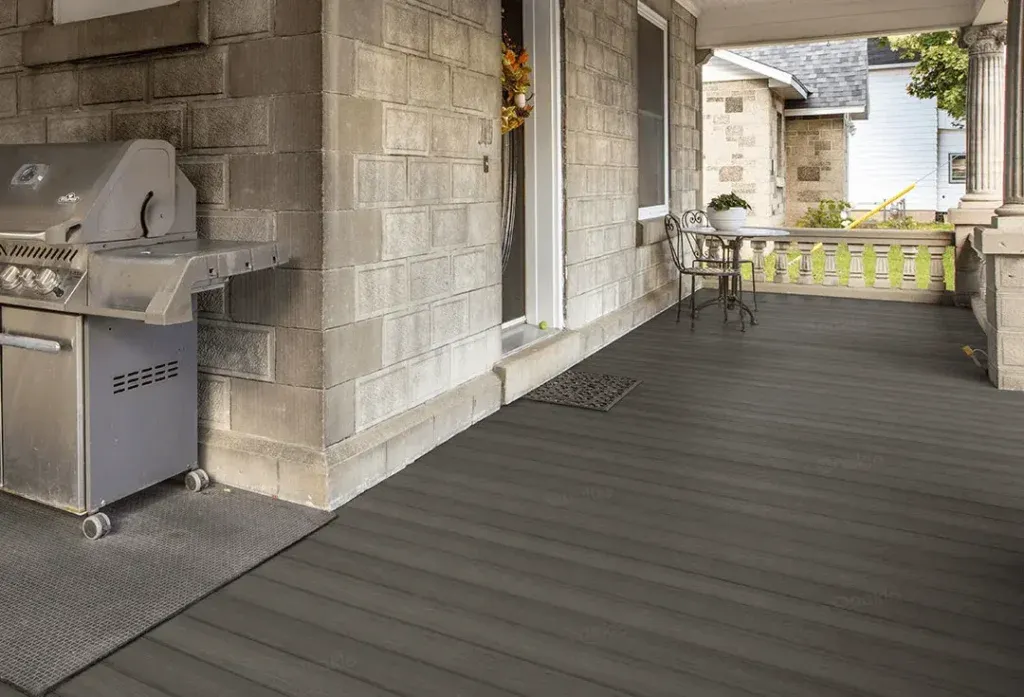
A convincing sample is not an installation plan. Decking guides identify board gaps, support spacing, drainage, and air circulation as important requirements. Fence planning likewise involves post placement, panel assembly, and gate details. Use these categories to organize a conversation with your installer, while following the instructions for your chosen systems.
Before placing the order, obtain clear answers on:
- Deck support: Confirm the selected board’s required framing layout and how edges, joints, and stairs will be supported.
- Movement and drainage: Ask which gaps apply to your product and installation conditions, including clearance at fixed structures.
- Fasteners and accessories: Identify the approved clips, screws, trims, and any special fittings in the quotation.
- Fence foundations: Have the installer assess post locations, ground conditions, gate supports, and exposure.
- Finished details: Agree on visible board ends, perimeter edges, access points, and transitions to paving.
Manufacturer guidance shows why these checks matter: deck gaps accommodate drainage and movement, while fence foundation requirements may need adjustment for local conditions. Avoid substituting a generic online spacing rule for product-specific instructions and a site assessment.
What should you confirm before choosing Yongtech?
Before choosing Yongtech, confirm the manufacturer’s full identity, the exact decking and fence models, and the documents supplied with each. The information provided here does not establish a particular Yongtech product’s specifications, warranty, or suitability for your site. Treat the brand name as the beginning of your evaluation, not as proof of performance.
Request a complete sample pack and a written proposal that separates the two systems. For WPC decking, ask for profile details, installation instructions, care guidance, and warranty terms. For a WPC fence, request the panel arrangement, posts, rails, gate components, and foundation guidance applicable to the proposed design.
Ask who handles technical questions and warranty enquiries after delivery. Keep the quotation, product codes, approved drawings, and correspondence together. If an important answer remains verbal or unclear, resolve it before paying a deposit.

Compare the whole project and plan for care
Ask every supplier to quote the same scope: boards or panels, supporting components, accessories, delivery, installation, and finishing work. Request separate allowances for removal of existing materials or site preparation where relevant. This makes the comparison more useful than judging proposals by a board-only price.
Read the warranty alongside the care instructions, not after installation. Ask what is covered, what exclusions apply, and what documentation a claim would require. Avoid assuming that one product’s warranty or cleaning method applies to another.
Low maintenance still involves care. For example, Yongtech distinguishes cleaning guidance by product generation and recommends soap-and-water cleaning for several high-performance lines. That is a useful reminder to follow the instructions for your selected material rather than applying a universal cleaning recipe or pressure-washing setting.
Choose a coordinated system, not just attractive boards
A successful outdoor project starts with a clear brief and a product you can evaluate properly. Coordinate the deck and fence visually, but check their specifications, installation details, and care requirements separately. If you are considering Yongtech, request samples and a fully itemized proposal before deciding; the strongest recommendation is one supported by clear answers for your actual space.